If you are reading this because someone is hurting you, or because you are worried about someone close to you, this page is meant to be useful rather than frightening. It sets out where to get help in Kenya, what the national data actually shows, and what the law says.
A calm safety note first. If you are in immediate danger, call the police on 999, 112 or 911. If you are using a shared or borrowed phone or computer, another person may be able to see your browsing history, so you may prefer to read this on a device only you use, and to close the page whenever you need to.
Where to get help in Kenya right now
The services below are commonly used national services. This is not an exhaustive list, and helpline numbers do change over time, so please confirm that a number is still working before you rely on it in an emergency.
- Police emergency: 999, 112 or 911. Use these if you or someone else is in immediate danger.
- Healthcare Assistance Kenya (HAK) national GBV hotline: 1195. Toll-free and open 24 hours, for information, counselling and referral.
- Childline Kenya: 116. Toll-free and open 24 hours, for anyone under 18 or for an adult concerned about a child.
- Gender Violence Recovery Centre (GVRC), Nairobi Women's Hospital: 0719 638 006. Free medical and psychosocial care for survivors.
- National Gender and Equality Commission (NGEC): ngeckenya.org. The public body mandated to promote equality and freedom from discrimination, with information on complaints and referrals.
- Global Women Impact Foundation (GWIF): info@globalwomenimpactfoundation.org or +254 723 428 105. We can refer you to services and, where you want it, accompany you. GWIF is not an emergency service and does not run a 24-hour hotline.
If you need medical attention, a health facility or a recovery centre such as GVRC can provide care. Getting seen early matters for your health, and health workers can also record what happened, which is useful if you later decide to report. You do not have to decide everything at once.
Where to report gender based violence in Kenya
Reporting is your decision, and it is a decision you are allowed to take slowly. In practice, people in Kenya report through a few main routes.
- The police. Any police station should record a report and, where relevant, issue documentation you may need for medical or court purposes. Gender desks exist in many stations.
- A health facility or recovery centre. Medical staff can treat injuries, provide follow-up care and document what happened.
- A helpline. HAK on 1195 and Childline Kenya on 116 can talk through options and connect you to services in your area.
- A civil society organisation. Organisations working on gender rights, including GWIF, can help you understand the process and go with you to appointments.
If you are supporting someone else, the most useful thing is usually to believe them, ask what they want, and help them reach one of these services rather than deciding for them.
What counts as gender-based violence
Gender-based violence is violence directed at a person because of their gender, or that affects one gender disproportionately. It is not limited to physical harm.
It includes physical violence, sexual violence, and violence by an intimate partner or spouse. It also includes emotional and economic control, sexual harassment in public spaces and workplaces, female genital mutilation, and child marriage.
It affects women and girls most, but men and boys also experience it. Naming it accurately matters, because people often do not seek help until they recognise what is happening to them as violence rather than as a private difficulty.
Gender based violence statistics Kenya: what the data shows
The most reliable national picture comes from the Kenya Demographic and Health Survey 2022, conducted by the Kenya National Bureau of Statistics with The DHS Program.
According to the KDHS 2022, 34% of women aged 15 to 49 have experienced physical violence since age 15, and 16% experienced physical violence in the 12 months before the survey. Thirteen per cent of women have ever experienced sexual violence, and 7% experienced it in the past 12 months.
Among women who have ever had a partner, the KDHS 2022 records that 41% have experienced some form of spousal or intimate partner violence.
There is movement in the right direction on one measure. Physical violence in the last 12 months fell from 20% in the KDHS 2014 to 16% in the KDHS 2022. That is real progress, and it is also a reminder of how much remains.
The burden is not evenly distributed. The KDHS 2022 records gender-based violence affecting 47% of women with primary education, compared with 23% of women with more than secondary education. Education is not a shield on its own, but the pattern is consistent enough to shape where prevention work should go, which is part of why GWIF invests in girls' education and the barriers that push girls out of school.
Internationally, Kenya ranked 98th out of 148 economies in the World Economic Forum Global Gender Gap Report 2025, a fall of 23 places from 75th in 2024.
FGM prevalence in Kenya and the child marriage rate
The KDHS 2022 records that 15% of women aged 15 to 49 are circumcised, and that 2% of girls aged 0 to 14 have been circumcised. Prevalence has fallen substantially over two decades, from 32% in 2003 to 15% in 2022, as UNFPA Kenya notes in its summary of the survey.
Education tracks closely with the practice. The KDHS 2022 records FGM prevalence of 56.3% among women with no education, compared with 5.9% among women with more than secondary education. Looking at girls, prevalence is 11% where mothers had no education, and under 1% where mothers had secondary or higher education.
On child marriage, the KDHS 2022 records that 13% of women aged 20 to 24 were married before the age of 18. The UN Women Data Hub puts the figure at 12.5% married before 18 and 2.2% married before 15.
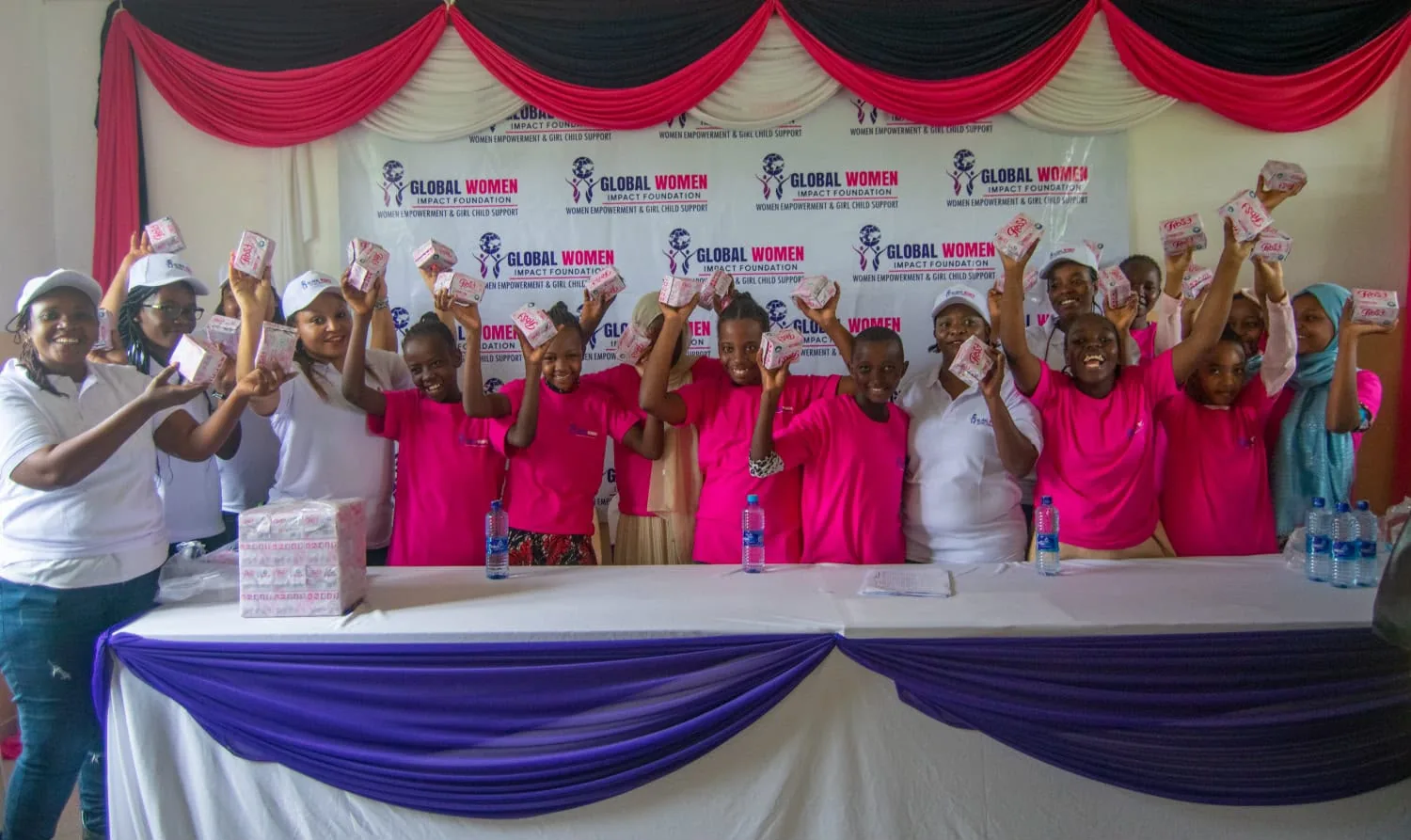
These two harms are closely linked to whether a girl stays in school, which is why practical work such as sanitary hygiene kit drives and period poverty sits alongside advocacy in GWIF's programmes.
Kenya laws protecting women, and the gaps
The following is general information about the law, not legal advice. For advice on your own situation, speak to a qualified advocate or a legal aid service.
The Constitution of Kenya 2010 is the starting point. Article 27 guarantees equality and freedom from discrimination, including equal treatment and equal opportunities in the political, economic, cultural and social spheres. Article 21 addresses security of the person against violence from both public and private sources, as summarised in Kenya Law's overview of gender-based violence and the legal framework.
Several statutes sit under that framework. The Sexual Offences Act criminalises defilement, rape, sexual harassment and sexual exploitation, and introduced minimum sentences in place of fully discretionary sentencing. It does not criminalise marital rape, which is a significant gap and worth stating plainly.
The Anti-FGM Act 2011 closes a gap left by the Sexual Offences Act by covering female genital mutilation performed on women over 18. The Children's Act protects children from physical and psychological abuse under section 13, and specifically from female genital mutilation and early marriage under section 14. The Protection Against Domestic Violence Act, the Matrimonial Property Act and the Marriage Act also form part of the framework.
Law on paper is not the same as protection in practice. The UN Women Data Hub scores Kenya at 55.6% on the SDG indicator for legal frameworks that promote, enforce and monitor gender equality.
Why many survivors never report
The KDHS 2022 asked women who had experienced violence what they did next. Forty-two per cent sought help to stop the violence. Seventeen per cent never sought help but told someone. Forty-two per cent never sought help and never told anyone.
More than four in ten women who experienced violence in Kenya told no one and sought no help, according to the KDHS 2022. Silence is not consent, and it is not weakness. It is usually a reasonable response to real risk, cost and stigma.
Attitudes are part of the picture. In an Afrobarometer survey conducted in April and May 2024 and published in July 2025, 16% of Kenyans said sexual harassment in public spaces occurs "often" or "always", and 66% believed that women who report harassment will be believed. At the same time, 79% said police and courts need to do more to protect women.
Economic dependence, distance from services, fear of losing children or housing, and pressure from family all weigh on the decision. None of these make a survivor responsible for what was done to them.
What prevention actually looks like
Prevention is slower and less visible than response, and it is where most of the long-term gain sits.
- Keeping girls in school. School attendance is linked to lower rates of FGM and child marriage in the national data.
- Economic independence. Income of one's own changes the options available to a woman deciding whether to leave a dangerous situation.
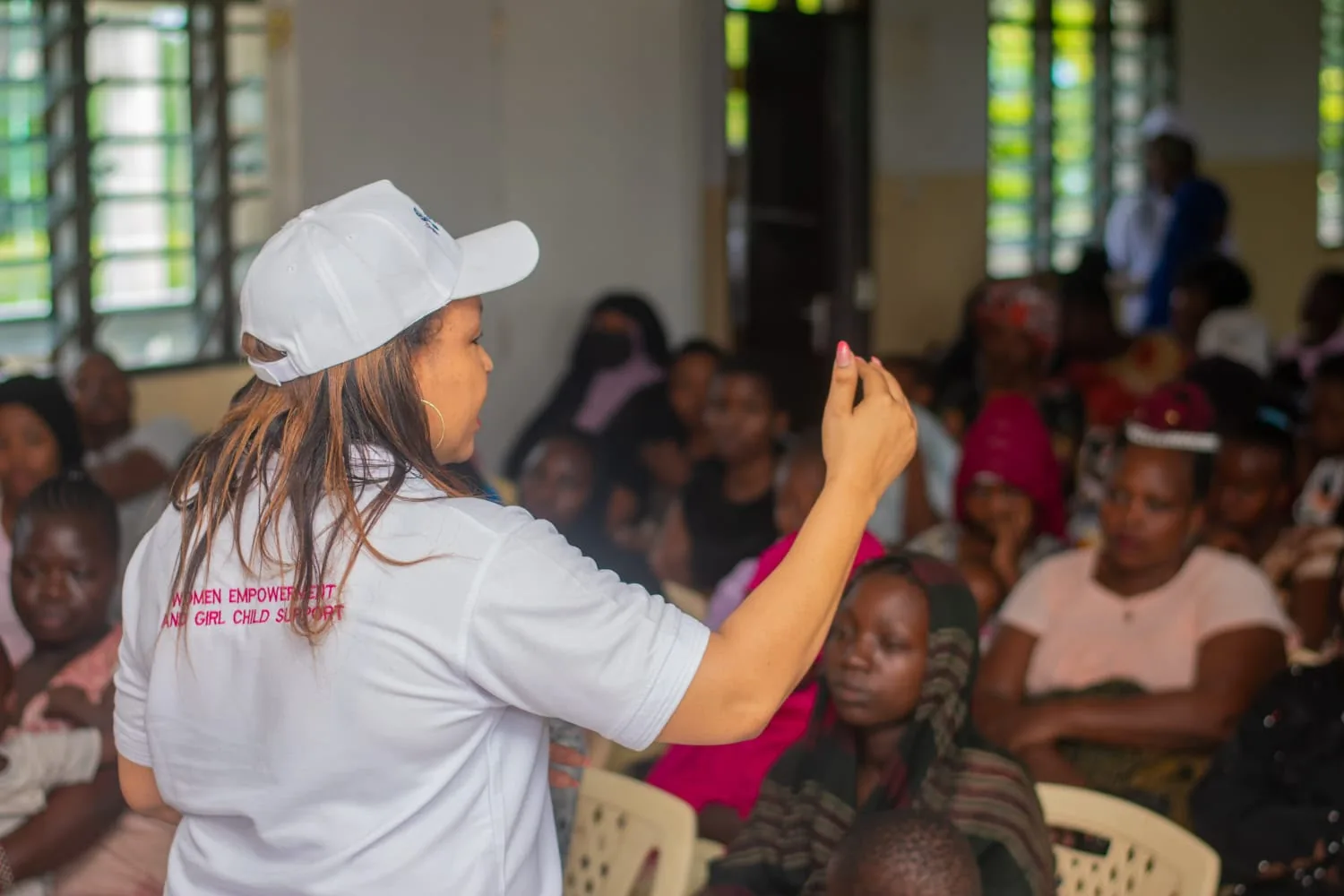
- Community sensitisation. Conversations with elders, faith leaders, men and boys shift the norms that make violence tolerable.
- Mentorship and peer support. Young women who have somewhere to talk are more likely to recognise harm early and ask for help. GWIF's mentorship circles for young women exist for this reason.
- Policy engagement. Gender-rights advocacy, including work with county and national bodies, keeps implementation on the agenda after the law is passed.
GWIF has worked across Kenya since 2020, with a strong presence in Coast Province and headquarters on Moi Avenue, Wimpy House, Mombasa. Our work runs through Girls' Education Support, Sanitary Hygiene Kit Drives, Women Entrepreneur Micro-Grants, Mentorship Circles and Gender-Rights Advocacy.
What you can do
If you are a survivor, the only step you owe anyone is the one you feel able to take. Save one number you trust. Tell one person you trust. That is enough for today.
If you want to support this work, there are a few practical routes. Learn about our objectives and how we work. Volunteer or partner with us. Support a girl's education or a woman's business through our programmes.
To reach us about a referral, a partnership, or accompaniment to a service, contact GWIF on info@globalwomenimpactfoundation.org or +254 723 428 105. We are not an emergency service. If the situation is urgent, call 999, 112 or 911, or the HAK GBV hotline on 1195, which is toll-free and open 24 hours.